Build games with your AI, and know they work.
The open handbook for people who make games by talking to Claude, ChatGPT, Cursor or any other AI: what to tell it, how each mechanic works with tested code, and how to make it prove that your rules hold as the game grows. Free to read, no sign-in.
Explore and learn game mechanics by playing them. Each picture is a little game. Click one and it starts. All 113 blueprints →
- 3,257wiki entries
- 113blueprints, each checked with TLA+, Z3 and Lean
- 53code recipes
- 2languages, English and German
Play a mechanic
113 blueprints come with a little game in pixel art that runs their tested code in your browser. Press Play, then read how it works.
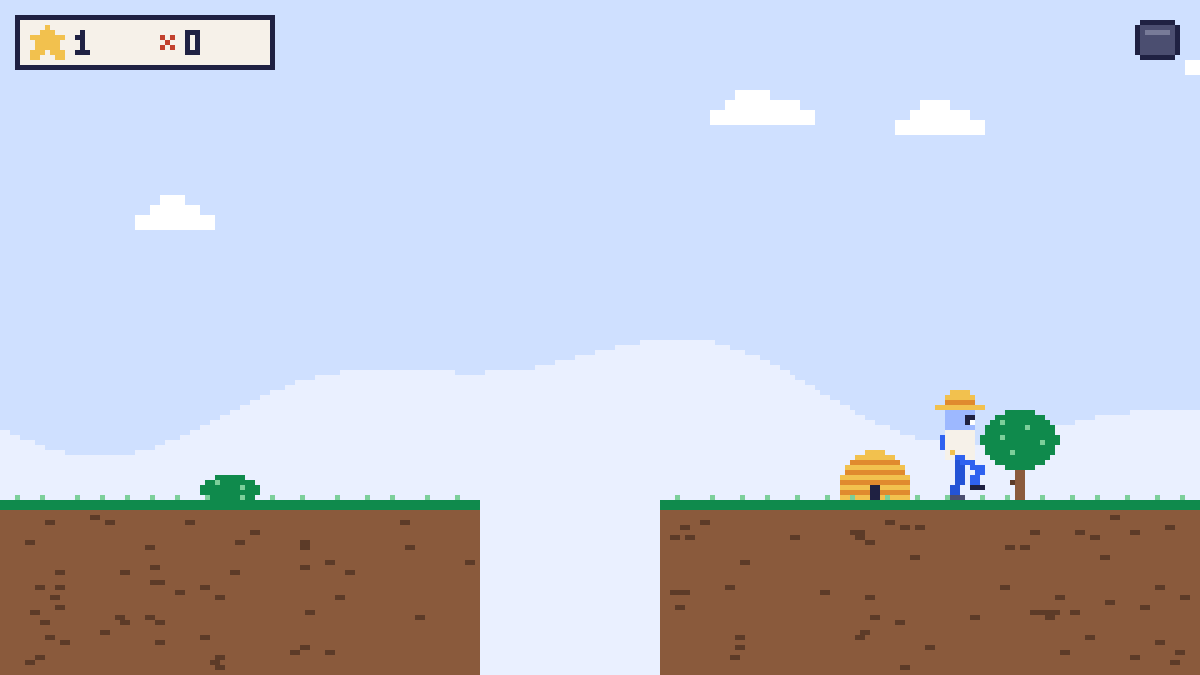
The demo is playing itself. Press a key or a button to take over.
Coyote Time. Walk off the left ledge without jumping and press jump just after the edge. While the bar is there you still jump, and the star counts it. Wait until the bar is gone and the same press does nothing.
←→ walk Space jump
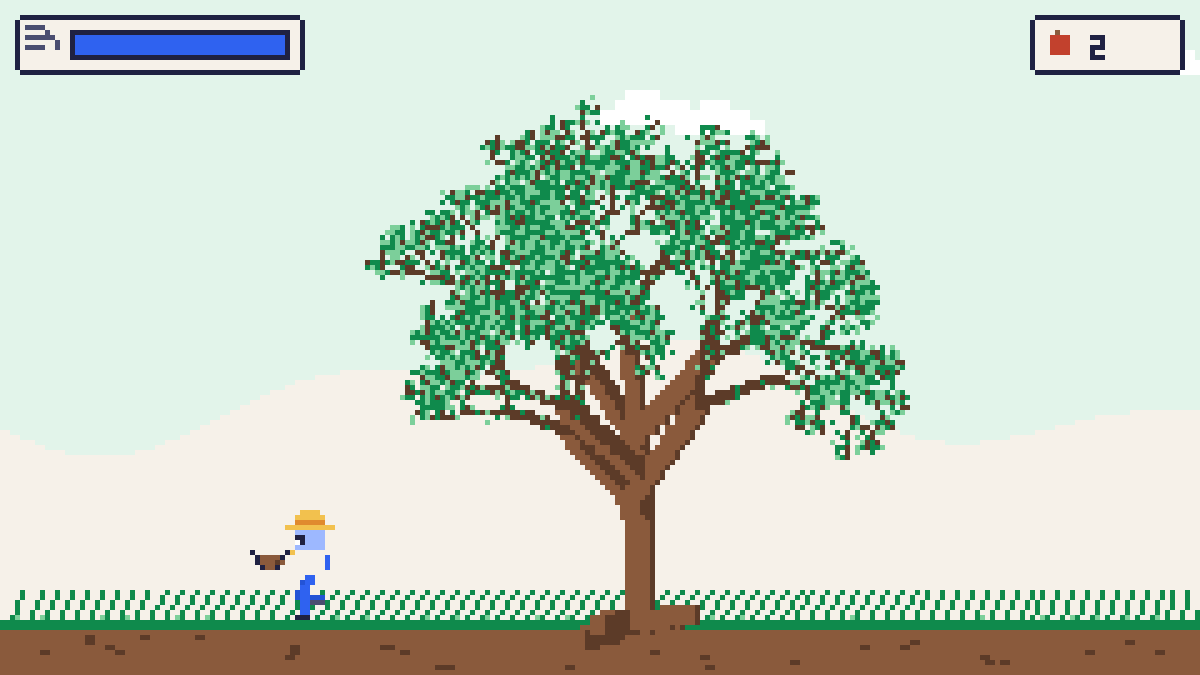
World
Wind-Rigged Tree
Trees that move like trees: the trunk sways, the crown follows and twigs tremble. The game works out the movement as it runs, so it needs no ready-made animation, and the tree stays small enough for that.
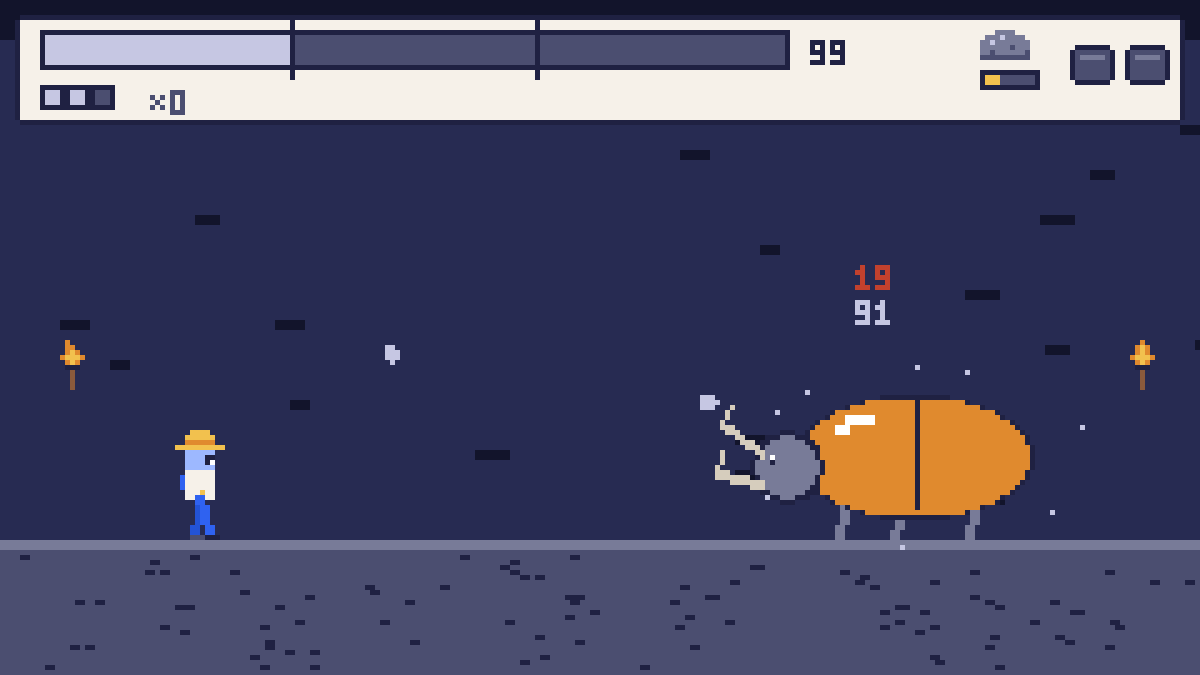
Combat
Boss Phases
Phases turn one long fight into three shorter ones, each with something new to learn. They also give the player a clear sign of progress, so a long fight keeps its drive.
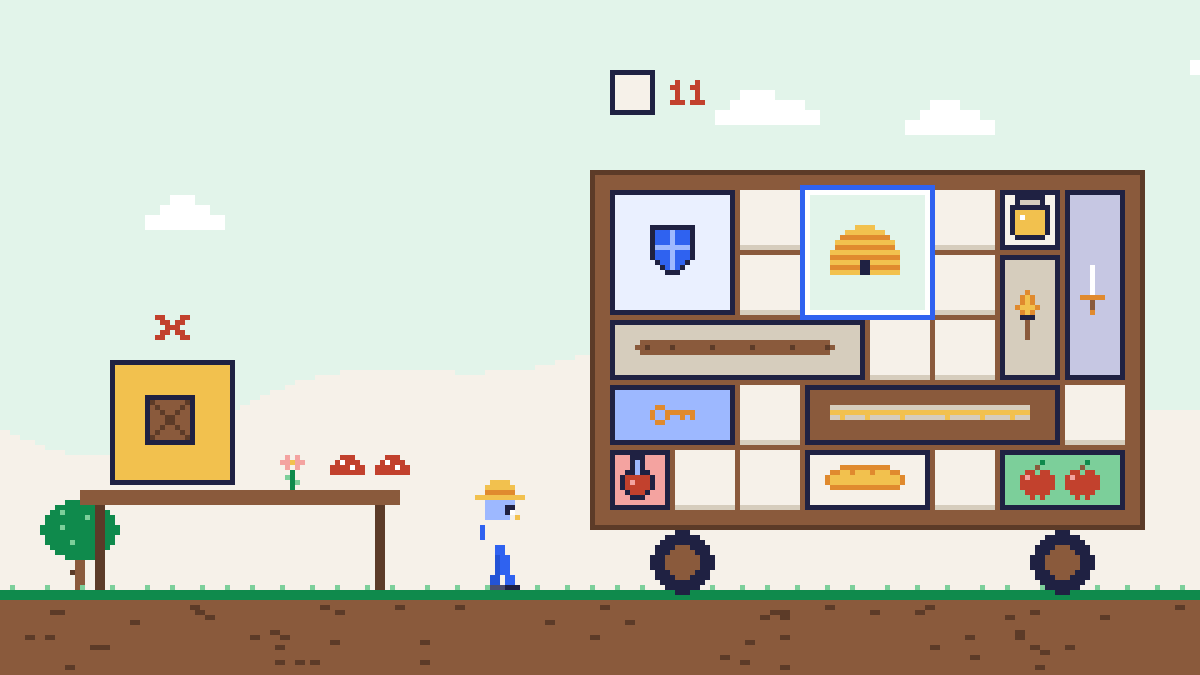
Inventory
Grid Backpack
Shape turns carrying into a puzzle. The player decides what to take, and also how to pack it, so a full bag is a question of fitting things together, not only of counting them.
Movement
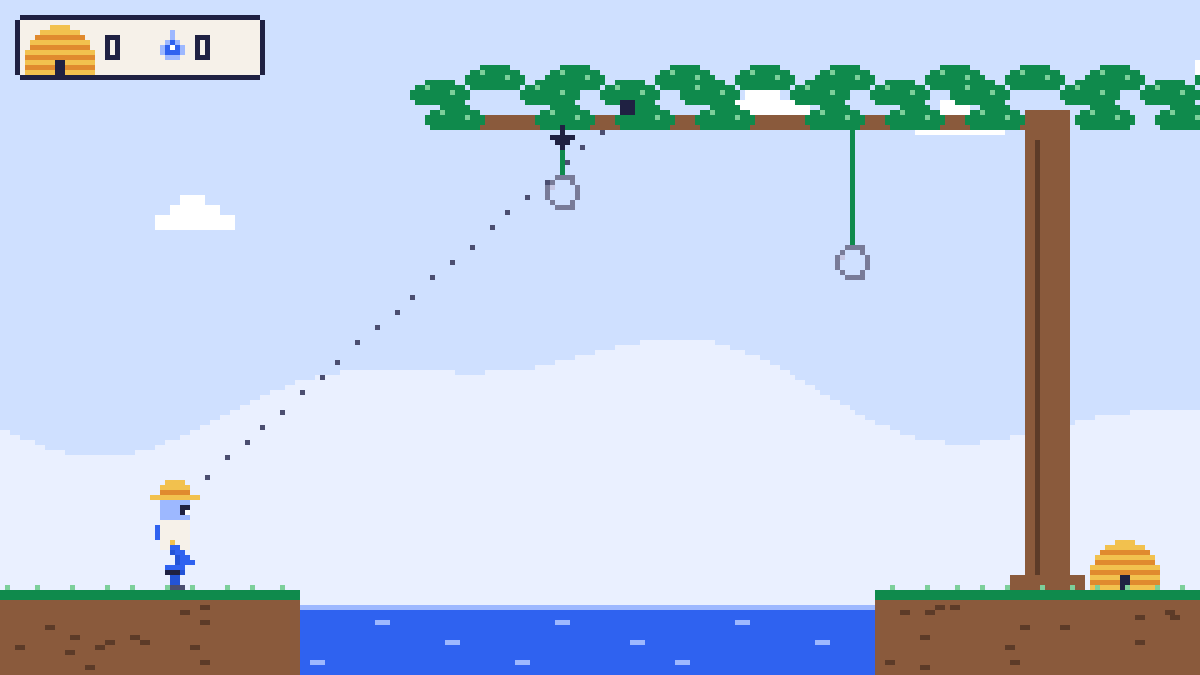
Grappling Hook
A hook lets the player cross gaps and pick their own route. It trades the safety of the ground for speed and reach, so catching an anchor has to feel reliable and the pull has to feel the same every time.
Resources
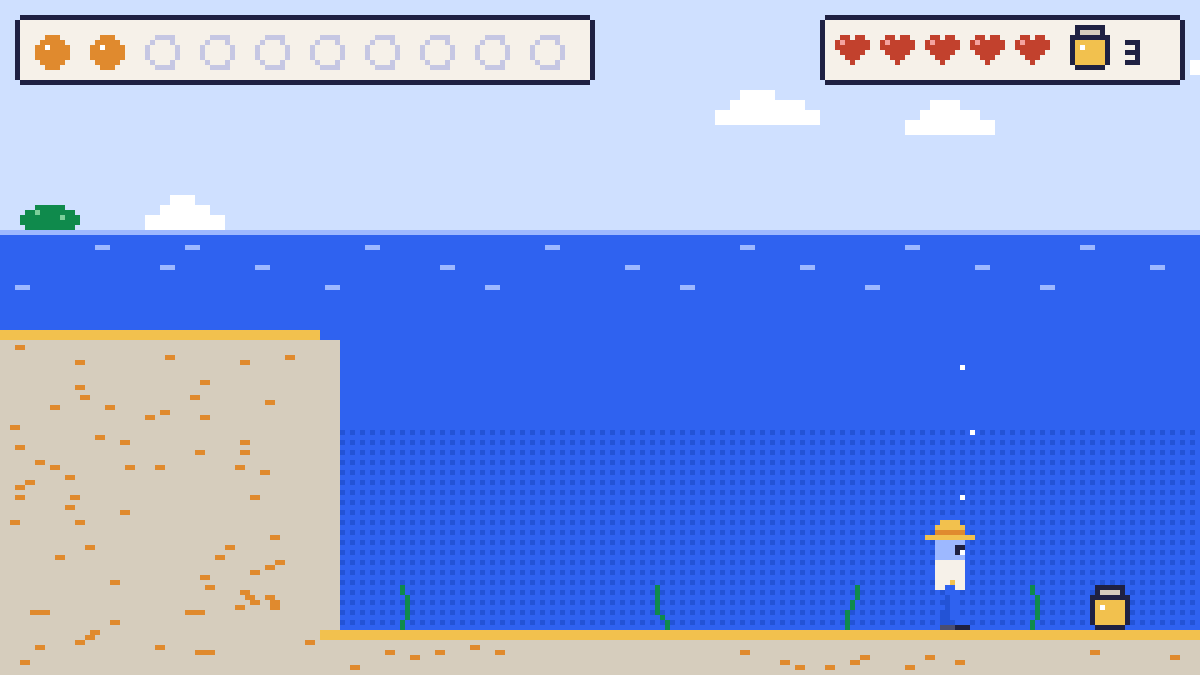
Oxygen Meter
Oxygen puts a clock on every dive. The player weighs how much farther to swim against how much air is left, so deep water feels risky without a sudden death.
Story
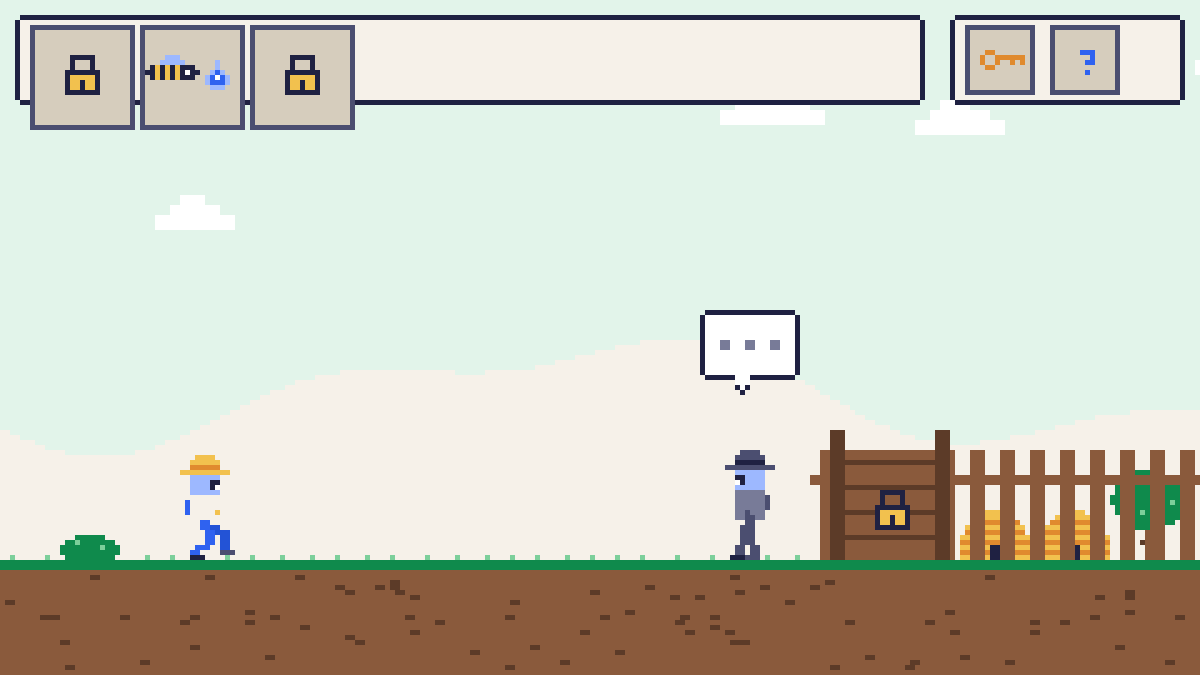
Dialogue System
Dialogue lets the player talk to the world, and what they say and do changes what comes next.
Progression
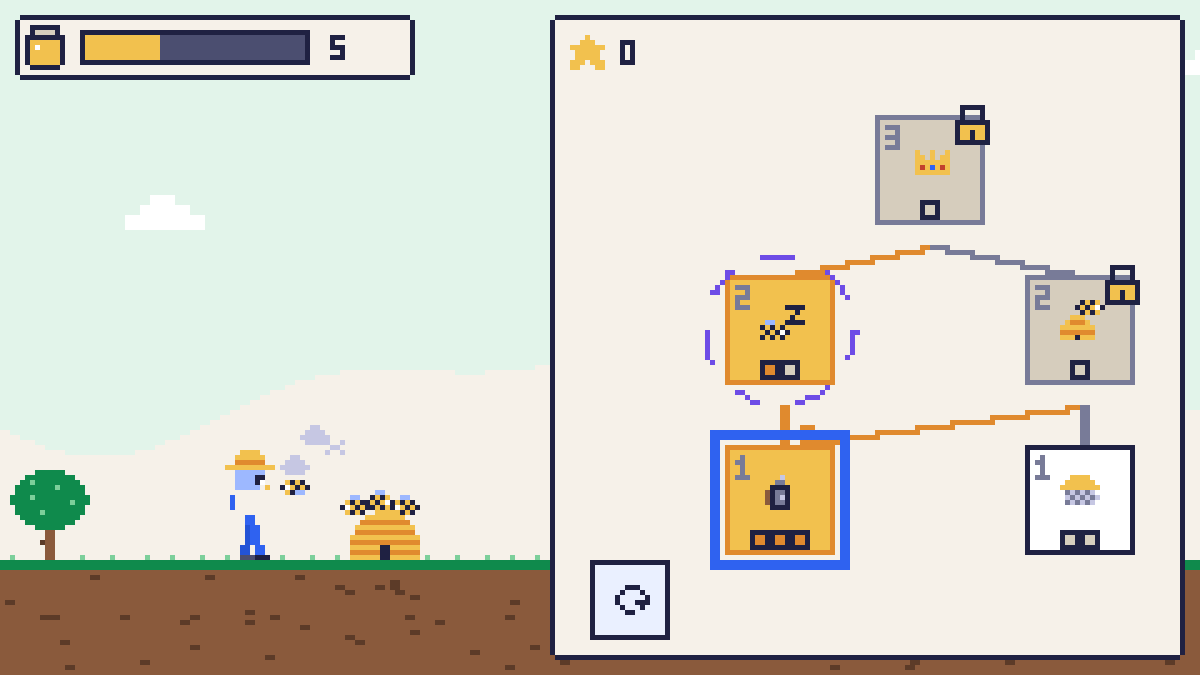
Skill Tree
A skill tree lets players decide what their character becomes, and each choice opens up later ones. That gives them something to plan for.
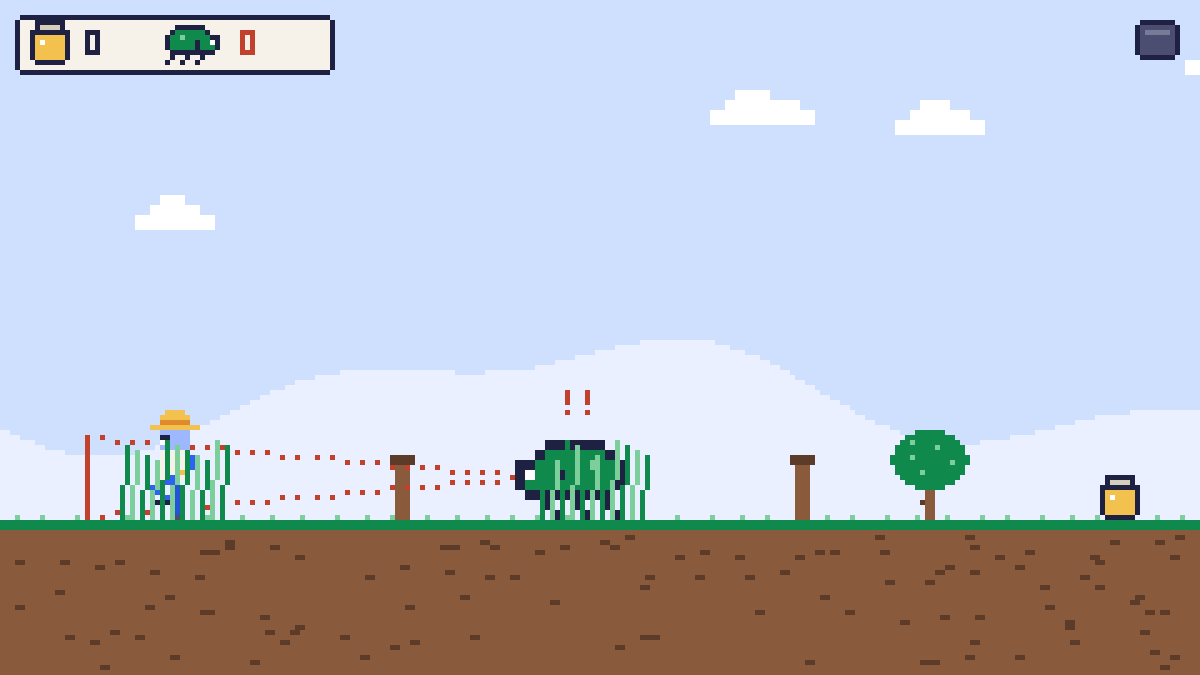
Combat
Enemy Patrol and Chase
A patrolling enemy gives the player something to read, sneak past, lure or fight. The pause before the chase, the search and the walk home are what make the enemy feel alive instead of like a trap that always knows where you are.
New course · 16 lessons · about 118 minutes of reading · Free
Game Design with AI: From One Mechanic to Your Own Game
An AI builds whatever you ask for, so the hard part is knowing what to ask for. This course starts with one mechanic, tests it before anything is built on it, grows a small whole game around it, and shows what separates a game that is yours from one nobody decided anything in.
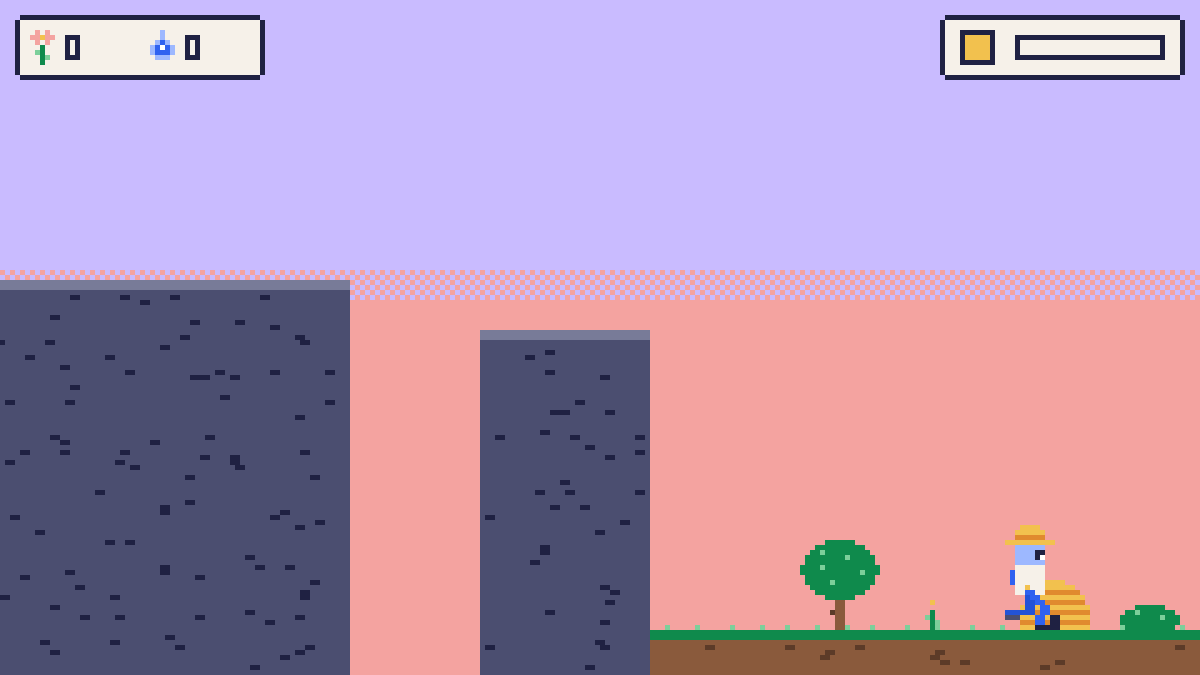
1 · 6 min
What a Game Mechanic Is: A Press, a Rule and an Answer
A game mechanic is something the player does, a rule that decides what happens, and an answer they can see. Take one apart in a playable dash, then write your own in three lines.
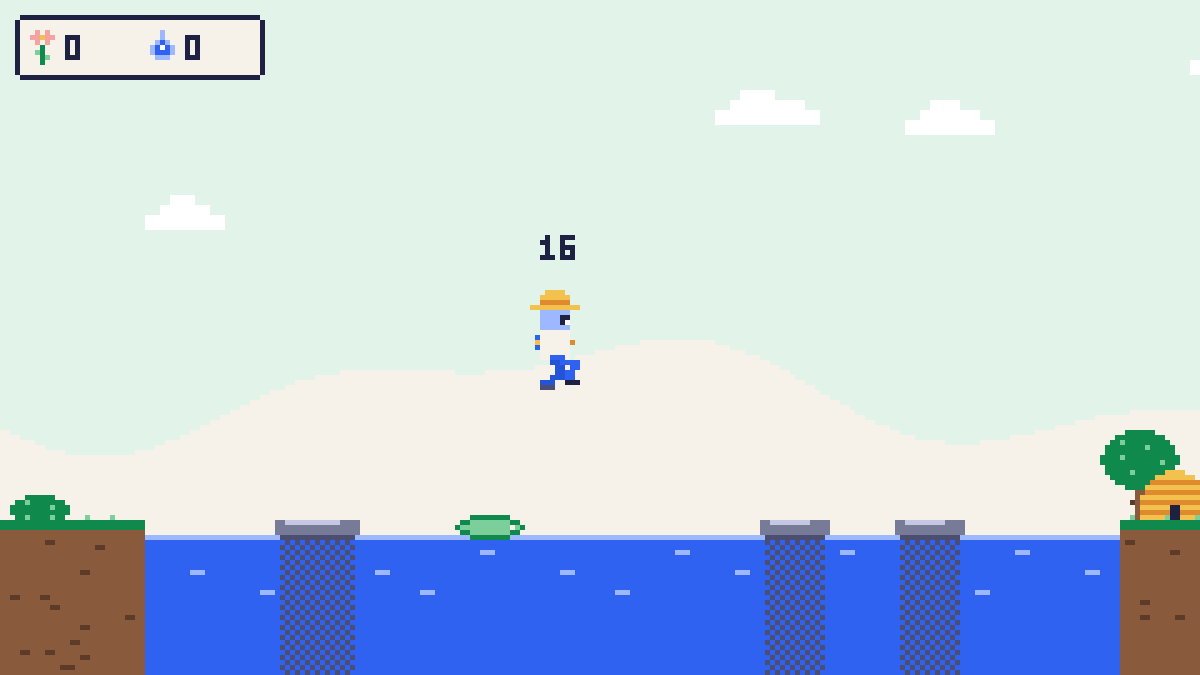
2 · 7 min
Game Mechanic Ideas: Four Places Where Mechanics Come From
Mechanics come from hands, limits, a known mechanic with one rule changed, and two that get in each other's way. Find all four in a charge jump, then write ten of yours.
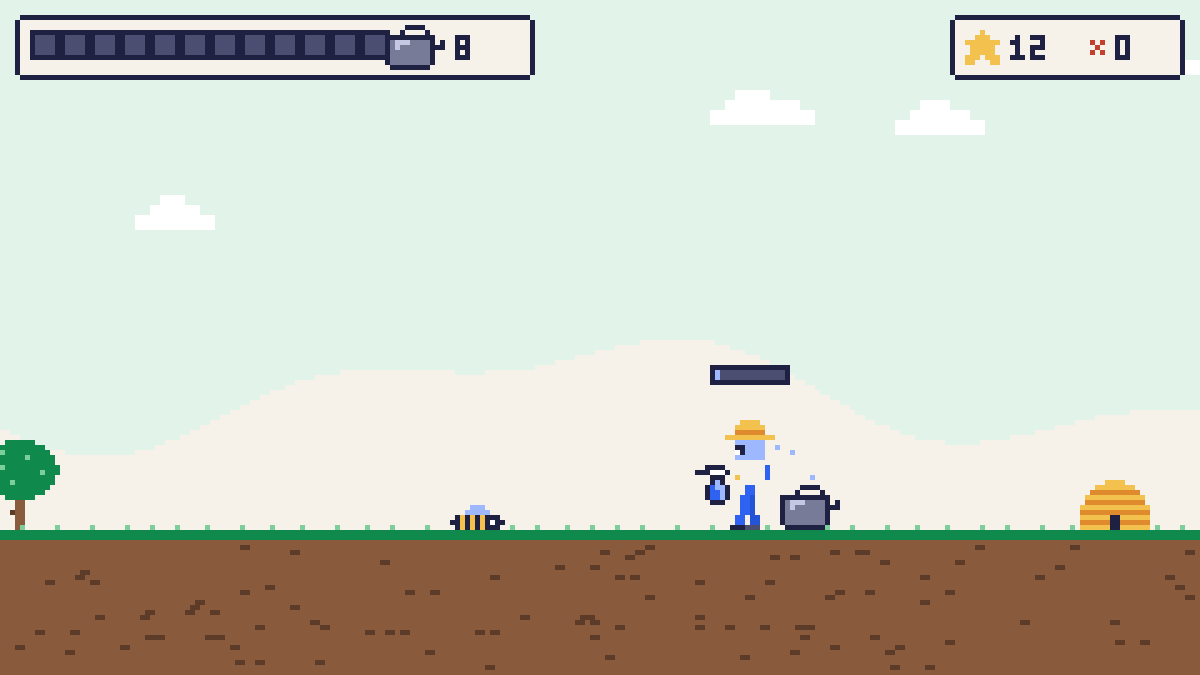
3 · 8 min
How to Write a Game Mechanic Down So a Test Can Check It
A rule you can test has states, moves and an answer for every what-if. Write one down on a playable spray bottle, and replace every 'sometimes' with a number.
Search
What is not working in your game?
How to use it
- 1
Find your problem
Search in your own words, or walk the topics. Every page is in plain language.
- 2
Give it to your AI
One button copies the text and the tested code. Paste it into Claude, ChatGPT or Cursor.
- 3
Ask for proof
Have your AI model the rules and run the checker, then show you its output. The guides show how.
Learn it in the order that works
A tree sorts, a path leads. Each path is a handful of steps in an order that works, with the reason every step comes where it does. Your AI can follow them too.
8 steps
A jump that feels good
Your first platformer, or one whose jump feels off and you cannot say why.
8 steps
A story that holds together
Any game with scenes, choices or characters, before it has many of them.
8 steps
Fair randomness and loot
Anything with dice, drops, crits or chests.
8 steps
Combat that reads clearly
Action games where hits feel mushy or unfair.
8 steps
Progress that keeps players going
Games with levels, skills, unlocks or a reason to come back tomorrow.
6 steps
Saving that never loses a game
Any game longer than one sitting, before the first update ships.
Find your topic
Vibe coding
Everything about building games by talking to an AI.
Story
Plots, characters and choices that hold together.
Game logic and odds
State machines, odds and checks your AI can use to show that something really works.
Game data
Real player data that makes the game better: where people quit, die and get bored.
Animation and pixel art
Tested code for smooth motion and for pictures made of pixels. Your AI gets the code.
When things break
What to tell your AI when the game falls apart.
A few of the entries
Each one open, with steps, values, pitfalls and tested code.
Give places names from the map seed that never change or repeat
Walk to the east first and the village is called Ashford, walk to the west first and the same village is called something else. Here is how to name places from where they are, not from when they were created, and to settle two places that land on the same name in a way that never depends on the order.
How long are players stuck with a full bag, and does it cost them loot?
Checking the bag only when something is picked up makes it look emptier than it was. This entry shows how to measure the real time a bag is nearly full and how much loot was left lying around because of it, so you can set the size of the bag with a reason.
How much of the game do players skip through at top speed?
If people spend a large part of the time at maximum speed, the game is probably slow to them. But the answer changes depending on whether you count their real time or the time inside the game. This entry shows both and which one to trust.
The average delay looks fine, but players still complain about lag
An average can be perfect while one in twenty moments is awful, and that is the moment players remember. This entry shows which figures to report per region, and what to do with the failed measurements that otherwise spoil everything.
How often should a random fight start while walking, so that it neither bursts nor drags?
A flat chance on every step gives two fights back to back and then a long quiet walk, which players call both annoying and boring. This entry shows how to set the chance and a quiet start so the average is what you meant and the extremes are known.
Enemies drop loot twice or keep hurting me after they are already dead
Double rewards and damage from the dead come from the same slip: something is told about a death twice, or acts after it. This helper reads a list of what happened to each character and points out the hits that came too late and the deaths that happened twice.
Story help
How to Build a Branching Story That Does Not Break
Model every scene with what it needs and changes, then have a checker walk every path. It finds dead ends and gives you the exact path to each one.
How to Build Quests That Do Not Get Stuck
A quest gets stuck when a step needs something that is gone. Model who holds what, and a checker shows the exact path to each stuck quest.
How to Keep Your Game Characters Consistent
Put each character's fixed facts in a model and have a checker walk every path. It shows the exact scenes where someone acts against their sheet.
How to Make a Game Story Without Errors or Plot Holes
Have your AI model your story and run a checker over every path. It names the exact scenes that break a rule, so you fix real errors, not guesses.
How to Make Player Choices That Really Matter
A choice matters when the game remembers it and shows the result later. Model every choice and have a checker find the paths where nothing changes.
How to Make Save Games That Keep the Story
A save must store what happened in the story, not only where the player stands. Model saving and loading as steps, and a checker finds what gets lost.
Proof, not promises
Small games work on the first try. Growing ones break where rules meet. TLA+, Z3 and Lean check every path, every setting and every input, and your AI can write them. Here is how.