Ground Pound
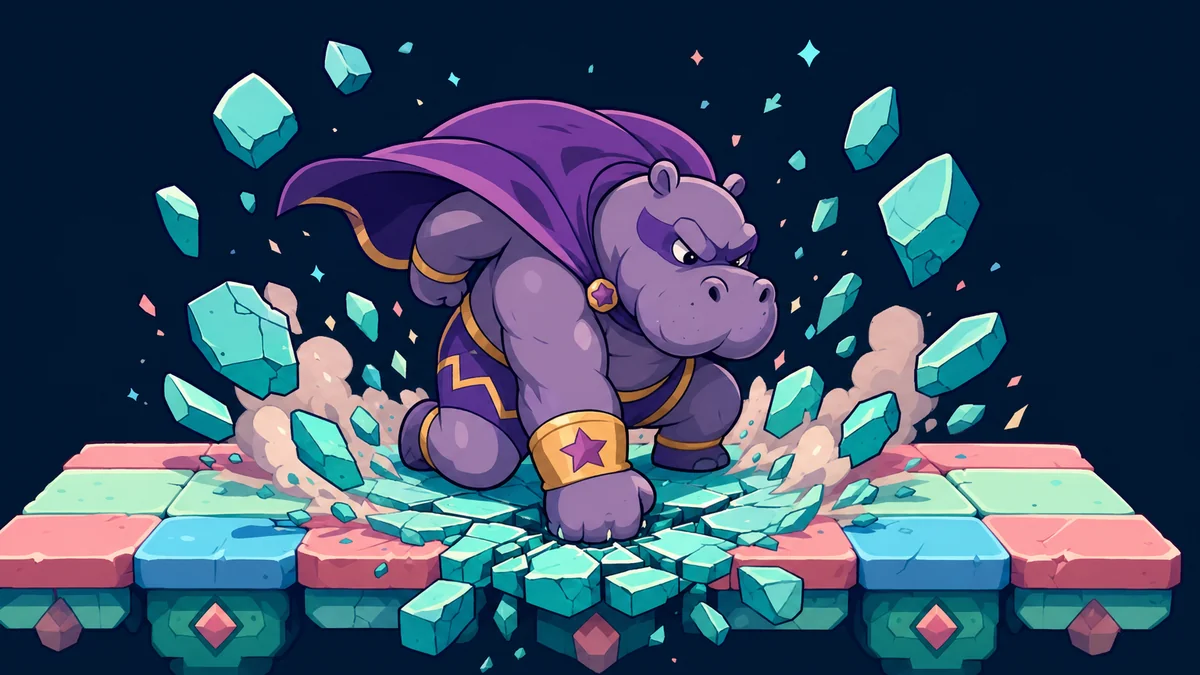
A ground pound pauses the character in the air, then slams it straight down at a fixed speed. The landing reports how far the slam fell, so a shock wave can grow with it, and leaves the character stunned for a moment. Set the speed instead of adding to the fall.
Paste this to your AI
Copy it into Claude, Cursor or ChatGPT. It already has good values and the usual mistakes in it.
Add "Ground Pound" to my game.

What it should do: A slam gives the player a heavy, committed move: a short wait, a fast drop and a landing with weight. It trades a moment of safety for force and a way to hit what is below.

Build it exactly as this state machine. First check that it fits my game, then build it like this:

```mermaid
stateDiagram-v2
  [*] --> ground
  ground: On the ground
  air: In the air
  pause: Pausing
  slam: Slamming
  stunned: Stunned
  ground --> air: walks off an edge
  ground --> pause: steps off, presses down
  air --> ground: lands
  air --> pause: presses down up high
  pause --> slam: pause is over
  pause --> ground: ground comes up
  slam --> stunned: hits the ground
  stunned --> ground: stun is over
  stunned --> air: floor is gone
```

Use these starting values:
- pauseTime: 0.15 s
- slamSpeed: 28 units/s
- recoverTime: 0.3 s
- minHeight: 1 units
- gravity: 32 units/s²
- maxFallSpeed: 20 units/s

Watch out for these common mistakes:
- The slam adds to the fall speed: Tell your AI: stop the character in the air first and then set the speed to the slam speed.
- A long tick pushes the body below the ground: Tell your AI: check against the ground for the whole move of the tick and put the character on the ground when it is reached.
- A press held through the landing: Tell your AI: react to the moment the button goes down, not to it being held, and ignore presses during the slam and the stun.
- The ground moves: Tell your AI: look at the floor on every tick, stand on it when it has come up and fall when it is gone.
- A slam that starts almost on the ground: Tell your AI: start a slam only above a minimum height and ignore the press otherwise.

Do not change anything else in the game. Do not claim anything without proof: model what it takes, and show me what your solution rests on and how I can see that it works. If you cannot show something, say you do not know. When you are done, tell me in plain words how to try it.Or skip this and connect the MCP: your AI then finds all of this by itself.Connect the MCP
What it does
A slam gives the player a heavy, committed move: a short wait, a fast drop and a landing with weight. It trades a moment of safety for force and a way to hit what is below.
How it runs, as a diagram
Everything it can be in, and what moves it on. Your AI builds from exactly this.
How it runs, as a diagram
- On the ground → In the air: walks off an edge
- On the ground → Pausing: steps off, presses down
- In the air → On the ground: lands
- In the air → Pausing: presses down up high
- Pausing → Slamming: pause is over
- Pausing → On the ground: ground comes up
- Slamming → Stunned: hits the ground
- Stunned → On the ground: stun is over
- Stunned → In the air: floor is gone
Good starting values
| Value | Start with | What it changes |
|---|---|---|
| pauseTime | 0.15 s | How long the character hangs in the air before the slam. Long enough to read as a wind-up, short enough not to feel like waiting. Zero slams on the next tick. |
| slamSpeed | 28 units/s | How fast the slam falls. Above the normal fastest fall, so it clearly feels like a different move. |
| recoverTime | 0.3 s | How long the character is stunned after landing. This is the price of the move: long enough to be a risk, short enough to try again. |
| minHeight | 1 units | The least height above the ground at which a slam may start. Below it, the slam would be a landing with extra steps and the pause would look like a glitch. |
| gravity | 32 units/s² | How fast a normal fall speeds up. |
| maxFallSpeed | 20 units/s | The fastest a normal fall can be. The slam goes past it on purpose. |
What usually goes wrong
The slam adds to the fall speed
If the slam adds speed to the current fall, the move is weak after a rise and absurdly fast after a long fall, and the sizes of the shock waves are all different.
Fix: Tell your AI: stop the character in the air first and then set the speed to the slam speed.
A long tick pushes the body below the ground
At slam speed, a slow frame moves the body several units in one tick. If it only checks for the ground afterwards, the character ends up inside the floor or falls through a thin one.
Fix: Tell your AI: check against the ground for the whole move of the tick and put the character on the ground when it is reached.
A press held through the landing
A player who keeps pressing down starts a new slam at the first chance, or the press on the tick of landing counts twice. The move turns into an endless bounce.
Fix: Tell your AI: react to the moment the button goes down, not to it being held, and ignore presses during the slam and the stun.
The ground moves
A floor that rises into a pausing character, or is smashed by the slam, leaves the character inside it or standing on nothing.
Fix: Tell your AI: look at the floor on every tick, stand on it when it has come up and fall when it is gone.
A slam that starts almost on the ground
A press a hand's width above the floor pauses the character for no reason and lands it with a huge-feeling stun for a tiny drop.
Fix: Tell your AI: start a slam only above a minimum height and ignore the press otherwise.
How to check it works
- Your character is in the air, high above the ground. Press down: The character stops in place for the pause time and then falls at the slam speed.
- Your character is slamming. It falls for several ticks: It stays at the slam speed, which is above the normal fastest fall.
- Your character slams from a height of twelve onto ground at two. It lands: The drop is reported as ten, once, and the character is stunned.
- Your character falls normally. It lands: No drop is reported and the character is not stunned.
- Your character has landed from a slam. The player presses down again and again: The character stays stunned for the recovery time, ignores the presses and then stands normally.
- Your character is in the air, closer to the ground than the minimum height. Press down: Nothing happens and the character falls on normally.
- Your character stands on the ground. Press down: Nothing happens.
- Your character is pausing or slamming. The player presses down again: The pause is not restarted and the slam is not changed.
- Your character is stunned after a slam. The floor under it disappears: The character falls normally.
- Your character is pausing in the air. The ground rises to the character: The character stands on it and does not slam.
Works well with
- Double Jump: A slam after an air jump falls from higher up, which makes the strongest shock wave and rewards a planned sequence. Let the air jump come first and the slam second.
- Health and Damage: The drop is the number to scale damage or the size of the shock wave with, so a slam from higher up hits harder. Read the reported drop on the tick of landing.
- Stamina System: A refused slam should not pause the character, so check the cost before the pause. Spend stamina when the slam starts.
Clashes with Glide: Down in the air can mean slam, and a held jump button in the air can mean glide. Let the slam end the glide at once. It is the more committed move.
Common questions
what do i tell my ai to add a ground pound
Paste this: Add a ground pound: a press of down in the air, high enough above the ground, stops the character for a short pause and then sets its fall speed to a fixed slam speed. On landing report how far it fell, stun the character for a short time and ignore presses during the slam and the stun.
why pause in the air before the slam
The pause tells the player the move has started and shows the enemy what is coming. Without it, the slam feels like an ordinary fall. A tenth of a second is enough.
how long should the character be stunned after a ground pound
A third of a second is a good start. Shorter lets the player chain slams for free, longer makes the move feel like a punishment. Raise it if the slam is very strong.
should the slam get stronger the higher it starts
Usually yes, but through the reported drop, not through a faster fall. The speed stays fixed so the move feels the same, and the game scales damage or the shock wave with the drop.
Where it comes from
We could not find a reliable origin for this one yet.
What was checked
- 19 tests pass on the reference code.
- The state diagram was checked against the code, at the default values and at every listed low and high value.
Your AI gets the code
Tested example code comes through the Spielerando connection, so your AI can use it right away. How to connect it