Heimleuchten: Light Them Home
A storm has scattered the bees into the night. You have one lantern. Everything out there answers its light in its own way, and nothing moves until you do.
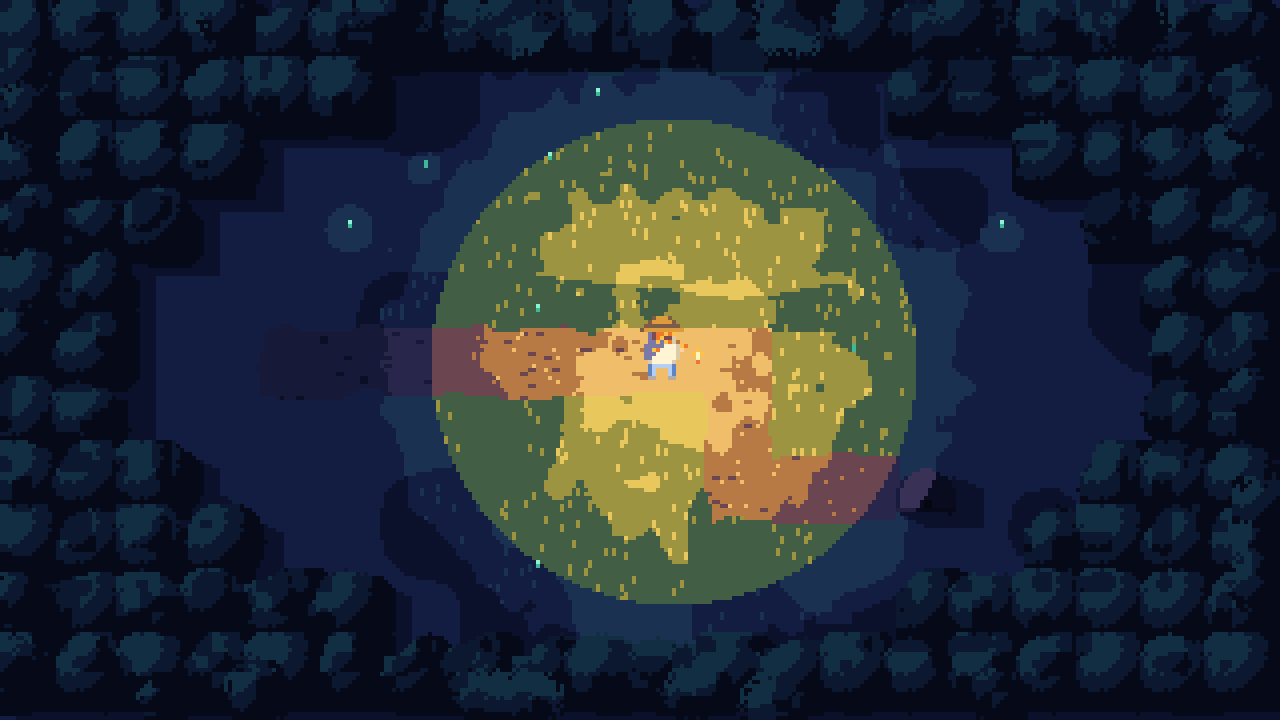
Moves in this room: 0Swarms home: 0 of 3
Morning. That was the night.
←→↑↓ walk Space lantern open or shut X set down or take R room again
The story so far
How the night works
- A cell is lit when the ground in its middle shows amber. That is all there is to know, and you can see it.
- Bees fly to the brighter cell next to them, and into an empty hive beside them. In the dark they sleep where they are.
- Beetles crawl one cell away from the light. A beetle, you or the lantern on a stone slab holds the gates open.
- Wasps wake a little with every move you make while light is on their nest: one red eye, two, three. At three they come out, and every swarm that is awake flies back to where you found it. In the dark they calm down again, an eye at a time.
- Glow-caps keep the lantern's light for four of your moves after it has left them.
- The night moves when you move. If a room has gone wrong, begin it again: that costs nothing.
What was checked before a room was drawn
- 11 rooms, each searched from its first position to its last: 15,574,148 positions in all.
- The shortest ways home add up to 224 moves.
- The story holds its 7 rules on each of the 6 nights it can be played in.
- TLC 2.19, a second program, walked the same story and agrees.
How it was made
Notes from building it, each with what to read up on.
- A style made of light: materials, six steps and one line
How the pictures of Heimleuchten are worked out instead of painted: a pixel stores what it is made of, lamps send rays, and the edge between blue and amber is where the game's rule stands.
- One fact, five answers: the whole game is the question "is my cell lit?"
The rules of Heimleuchten: bees, beetles, wasps, glow-caps and stone slabs all answer one fact, the night moves only when you move, and the rules were a tested file before anything was drawn.
- Every room is searched: what a program found in our rooms
A search walks every position each room of Heimleuchten can get into: it shows that there is a way home, that the room needs what it claims to teach, and where a player can get stuck for good.
- A twist that holds on all six nights: checking a story for holes
The story of Heimleuchten can be played in six orders. It is written as data, a checker walks every one of them, a second program agrees, and two mistakes put in on purpose are caught. This entry tells the ending.